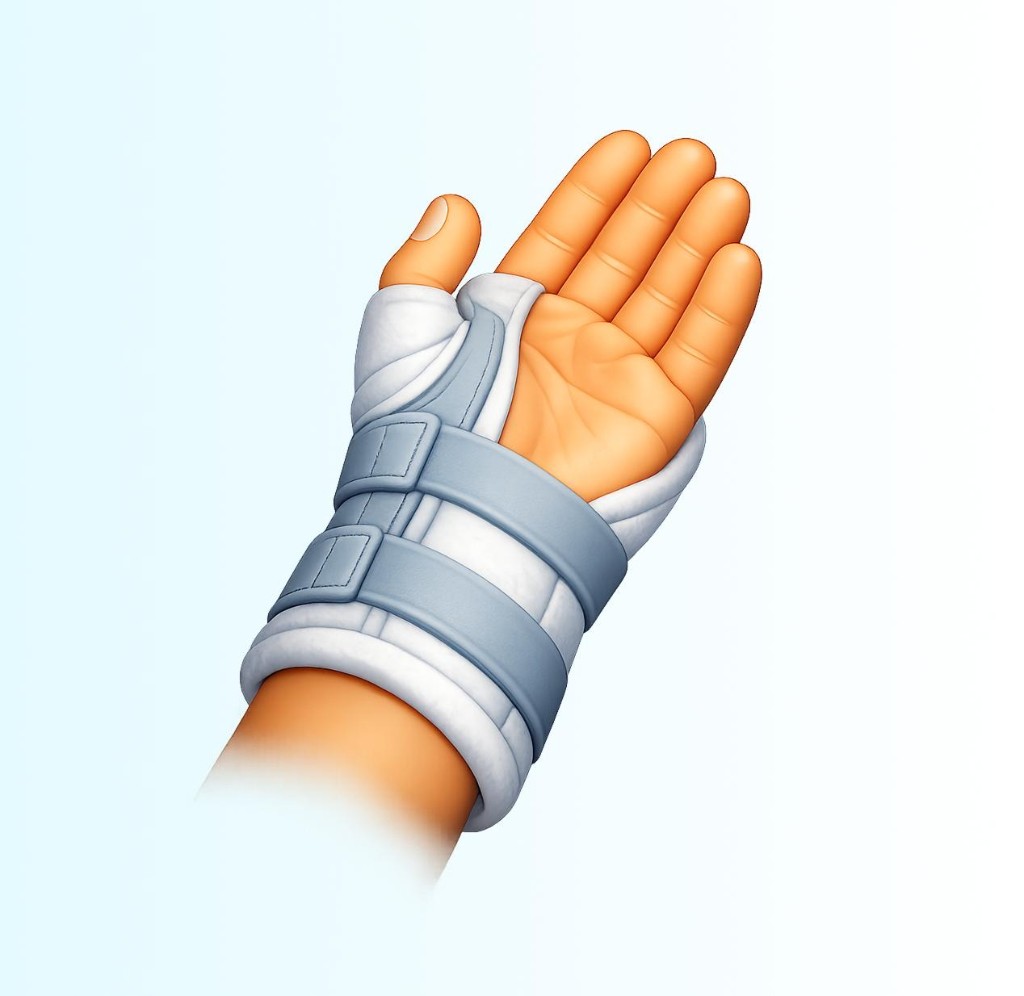
Wrist range of motion
Slow wrist movements through bend, extend, and side-to-side to maintain comfortable joint mobility.
Do this exercise
2 sets × 6 reps · hold 3s each. Watch the demo and tap through at your own pace — we log your reps, holds, and how it felt.
Prefer the classic step-by-step timer?
Forearm supported; hand off table edge.
Ready when you are
We'll guide you through 6 short steps — about 34 seconds of guided motion. Pause or stop anytime — nothing is uploaded.
Have ready: No special equipment
Contraindications & stop if…
When not to do this
- Acute wrist fracture
- Recent wrist surgery without clearance
- Active immobilization (cast/splint)
Stop if
- Sharp wrist pain
- Clicking with pain
- Sudden swelling
Prefer a quick pacing gate before the timer? Use full guided session — it asks for pain, stiffness, and fatigue in a few taps first (education only, not clearance).
Why it helps
Mobility work supports daily tasks like turning keys, pouring, and typing without forcing the joint.
What it should feel like
A gentle stretch at the end of each range. Never forced.
Target area
Instructions, dose & tipsSetup, how many to do, and common mistakes
How to do it well
Goal, setup, dose, and the things therapists most often have to repeat. This is education — not a replacement for your clinician's plan.
Before you start
- Forearm fully supported on a table.
- Hand hangs free off the edge.
- Move only into pain-free range.
Today's dose
- Reps
- 6
- Sets
- 2
- Hold
- 3s
- Sessions / day
- 3
- Rest
- 30s
- Pain ceiling
- 3/10
Common mistakes
- Forcing past the first sign of resistance
- Lifting the forearm off the table to 'cheat' more range
- Adding resistance — this is mobility, not strength
Easier version
- Skip side-to-side tilts if wrist is sore
- Reduce to 3 reps and shorten the hold
Harder version
Only if your phase allows progression.
- Add a 5-second hold at end-range (only if pain-free)
- Add a third set
How did this feel?
One tap. Saved as a question for your next visit when relevant — never auto-shared.