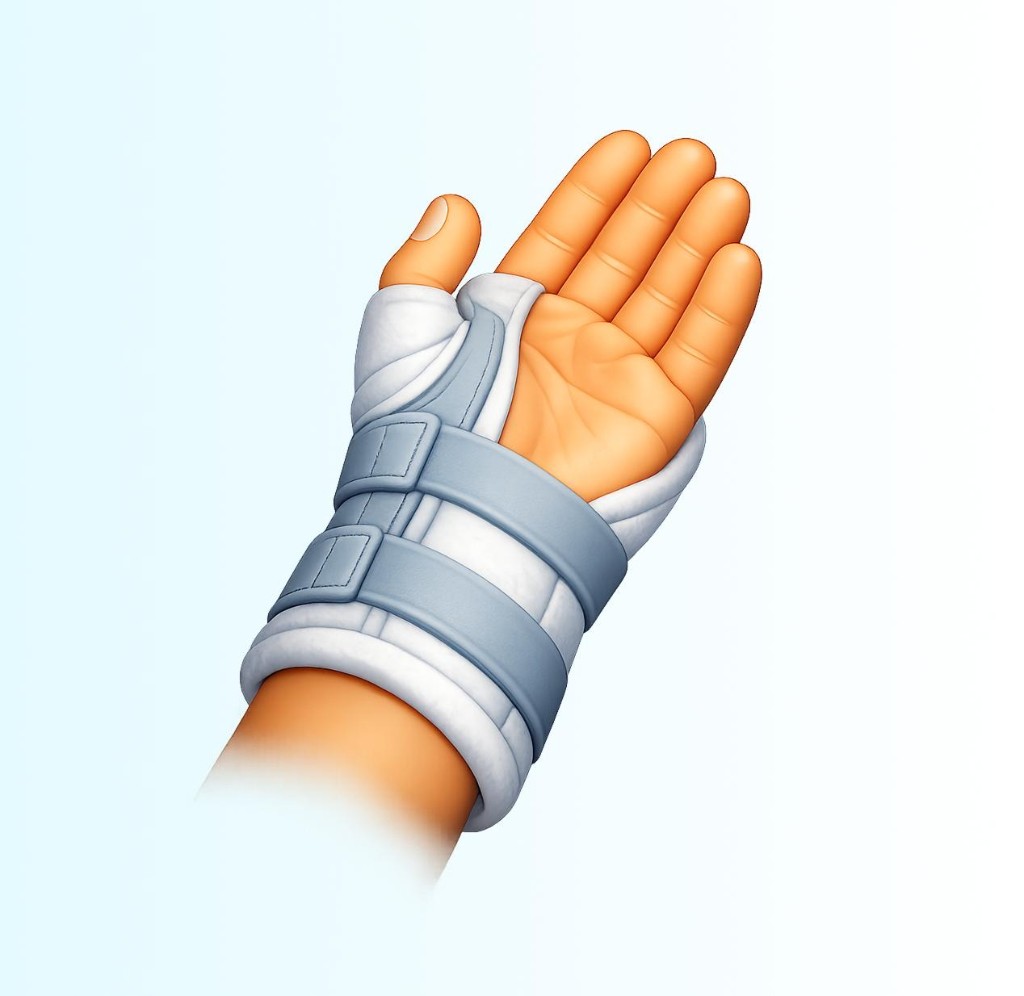
Thumb-to-fingertip touches
Thumb opposition with IP control
Related demo: Thumb opposition
ReelsGoal
Trains opposition arc and intrinsic-extrinsic balance for pinch and grip.
Motion taxonomy (reference)
Motion types: opposition
Also called: thumb arc · thumb to fingertip touches
Muscles — abductor pollicis brevis, flexor pollicis brevis, opponens pollicis
Tendons — flexor pollicis longus, thenar tendons
Bones / joints — first metacarpal, IP joint, MCP joint, proximal/distal phalanx, thumb CMC joint
Indexed benefits: improves pinch · restores fine motor use · supports grasp and buttoning
Common contexts: arthritis stiffness · pinch recovery · post-op thumb rehab
Best for
- Pinch precision
- Carpal tunnel recovery
- Arthritis maintenance
Default dose
5 reps • 5 sets • 2×/day — 5 rounds of touching each finger
Avoid when
- Acute CMC flare
- Fresh thumb repair without clearance
Measurement targets
- Round-trip time (sec)
- Touch accuracy
Setup
- Hand relaxed in front of you, palm visible.
Steps
- Touch thumb tip to index, middle, ring, then little fingertip.
- Form a clean 'O' shape with each touch.
Cues
- Move slowly; precision over speed.
Common mistakes
- Thumb collapsing inward.
- Skipping fingers.
Stop if you feel
Stop rules
- Sharp pain (≥ 4/10)
- Increasing swelling during or after
- New or worsening numbness or tingling
- Color change in fingers (pale, blue, red)
- Wound opens, drains, or feels hot
- Next morning is worse than the day before
Progressions
- Eyes-closed practice.
- Touch different parts of each finger.
- Add metronome.
Regressions
- Touch only index and middle initially.
Used in
Search the exercise library with this motion's clinical label for additional guided drills that may match your plan.
What to do next — not a dead end
Suggestions use body region, goal, motion type, and allowed phases — not your medical record. After surgery or a flare, follow your clinician first.
Short sets — often 5×5 as a micro-session
5 reps · 5 sets · 2×/day
None required — table or bodyweight only.
Phases 1, 2, 3, 4
Generally lower load — still respect pain and swelling.
Avoid if this sounds like you
Acute CMC flare
Fresh thumb repair without clearance
Reread best-for context ↑Where this shows up clinically
How phases map to healingNext best movements
Later phase or richer progression when you are ready.
Prerequisite / gentler lane
Same region and intent — usually earlier phase or lower risk.
Commonly paired with
Different primary goal, same region — typical mixed sessions.
Related movements
Similar mechanics, goals, or anatomy.
Guided exercises that use this
Step-by-step sessions that embed this movement pattern.
Keep momentum without overdoing it
Log a short check-in to protect your streak — even one quality set counts.